Spring bulb planting
Not tulips yet, unless you are up north. Night temperatures should be consistently below ten degrees and I for one, like to wait for the first frost before I commit them to the ground. Narcissi aren’t so fussy (also fritillaria and crocuses) and I will be doing mine this week. My top tips for spring bulb planting? Cram them all into pots. Why? Because the window of flowering is followed by a long period during which the dying back leaves feed the bulb and it looks, quite frankly, rather tatty. Putting everything in black plastic pots that can be tucked into buckets or troughs, or in amongst terracotta, means that you get all of the beauty and then you can move them to a sunny but less visible spot when the show is over.
Use a standard multipurpose peat-free compost for pots, and add a little grit.
Other benefits of this are that you don’t have to dig any holes and that it is much easier to secure chicken wire onto the top of a pot than it is bulbs in open ground. If you have any squirrels in your environs, they will find a bulb. I still haven’t got over the crocus massacre of 2020. Yes, I have tried chilli flakes, but I find only physical barriers work.
NARCISSI (DAFFODILS)
How: Two to three times the bulb’s height in depth. If you are planting in open ground, you can try a bulb planter, but I’ve never had much luck with them. 10cm apart, less for dwarf varieties, just make sure they aren’t quite touching.
Where: Ground or pots, I find the daffodils are the least fussy of the spring bulbs in terms of the soil but add grit if you are putting them into very damp ground. Under trees always looks amazing, but remember to put some around the back door too. You’ll need them after the long winter.
ALLIUMS
How: Slightly deeper than the others, around four times their height in depth, this helps to keep those long spindly stems upright. Around 10cm apart.
Where: In amongst perennials, in herbaceous borders, think dots amongst texture. In full sun.
CAMASSIA
How: Dig a hole about 10-15 cm (4-6 inches) deep. Space the bulbs about 10 cm (4 inches) apart. Water the bulbs well after planting to settle the soil.
Where: Camassia prefer moisture-retentive soil, but it must be well-draining to avoid waterlogging. Plant in a spot that receives full sun or dappled shade.
FRITILLARIA MELEAGRIS (SNAKE’S HEAD FRITILLARY)
How: Dig small holes with a trowel and drop the bulb in. Water well.
Where: In grass, in meadows, in drifts.
Other fritillaria: Full sun or partial/dappled shade, they will benefit from richer soil. Unlike F. meleagris, they won’t tolerate wet soil. Use a more loam based compost if you are planting into pots.
MUSCARI (GRAPE HYACINTHS)
How: These are very small, so easy to scatter and dig in using a small trowel or a hori hori. Also easy to layer into pots. Six to eight cm deep.
Where: Well-drained soil, in a spot that receives full sun to partial shade, like borders, under deciduous trees, or in pots.
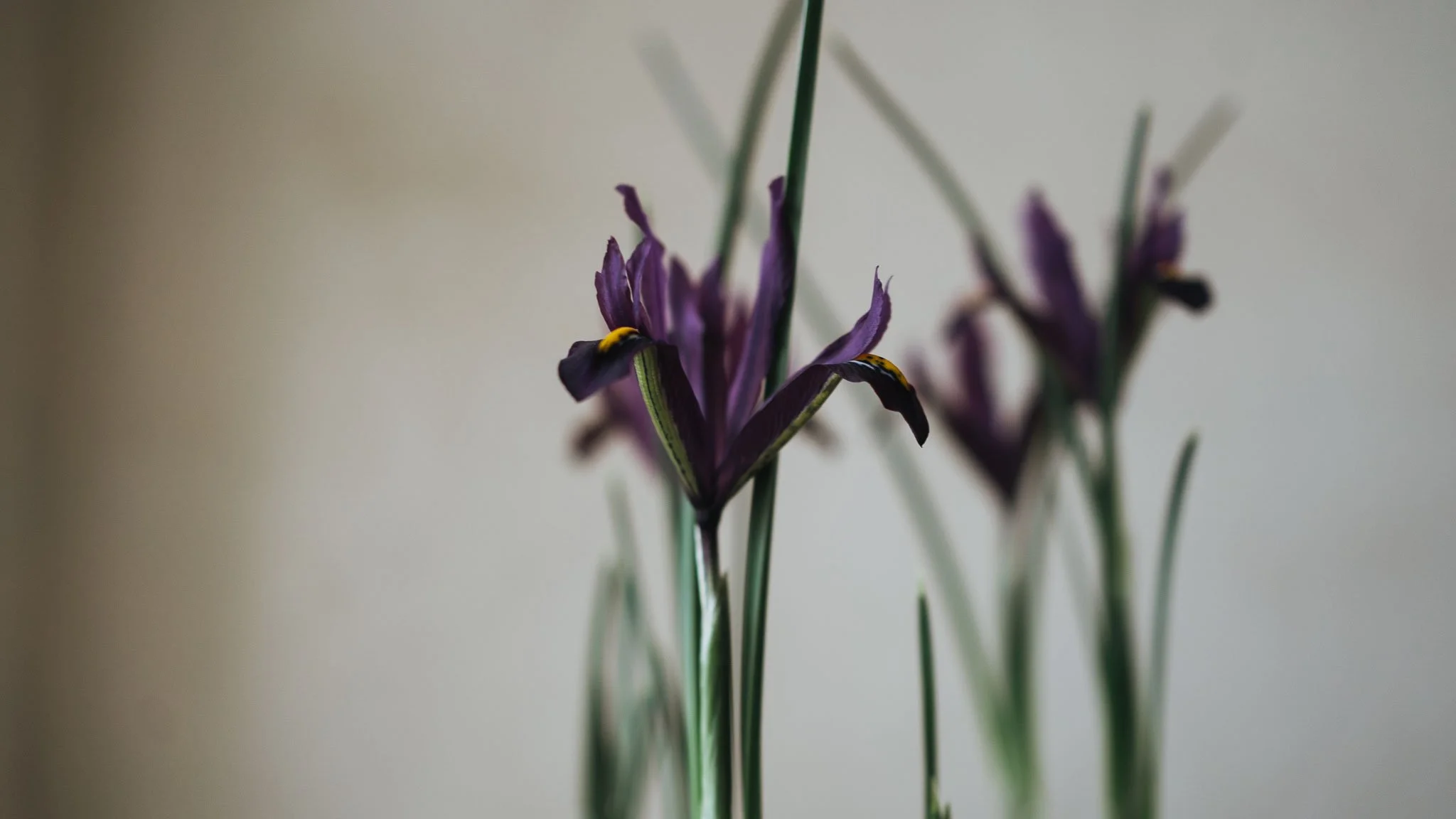
IRIS RETICULATA
How: Twice their depth and 5cm apart.
Where: These are alpine in origin so think fast draining and gritty. Full sun and well-draining soil, such as a sunny border, gravel garden, or alpine bed. I will only plant them in troughs; iris are small and so they do need to be lifted up to the eye.
CROCUS
How: For lawns and grassland, put all your bulbs into a bowl, close your eyes, and fling. Plant each one where it lands. This will give you a beautiful, natural pattern. Crocus corms are small, so easy to plant at the depth of double their height.
Where: I do still love a pot of crocuses or a low bowl.