Derby Day hedge trimming
South Wood Farm
Derby Day. The first Saturday in June. Traditionally the day for trimming box.
Two things before we get into the hows and whats.
Watch for birds
Firstly, if you have any big hedges that might even possibly have birds nesting in them, then you must not do anything until September. I won’t be trimming my tall native hedge until then, even though I am pretty certain there aren’t any birds in the hedge because two setters do a patrol around them twice a day and they do hard stares at any pigeons who make any foray into the field. Even so, I won’t risk it. Plus I don’t want to lose all the fruit that it already setting on the longest branches.
Anything but box
Secondly, if you don’t have any box hedging and you would like some, don’t. I haven’t yet got box blight in the field, although the big balls at the front have completely gone (I will dig them out today) and I cannot believe that I am on anything other than borrowed time. The next topiary shapes I put in will be something else.
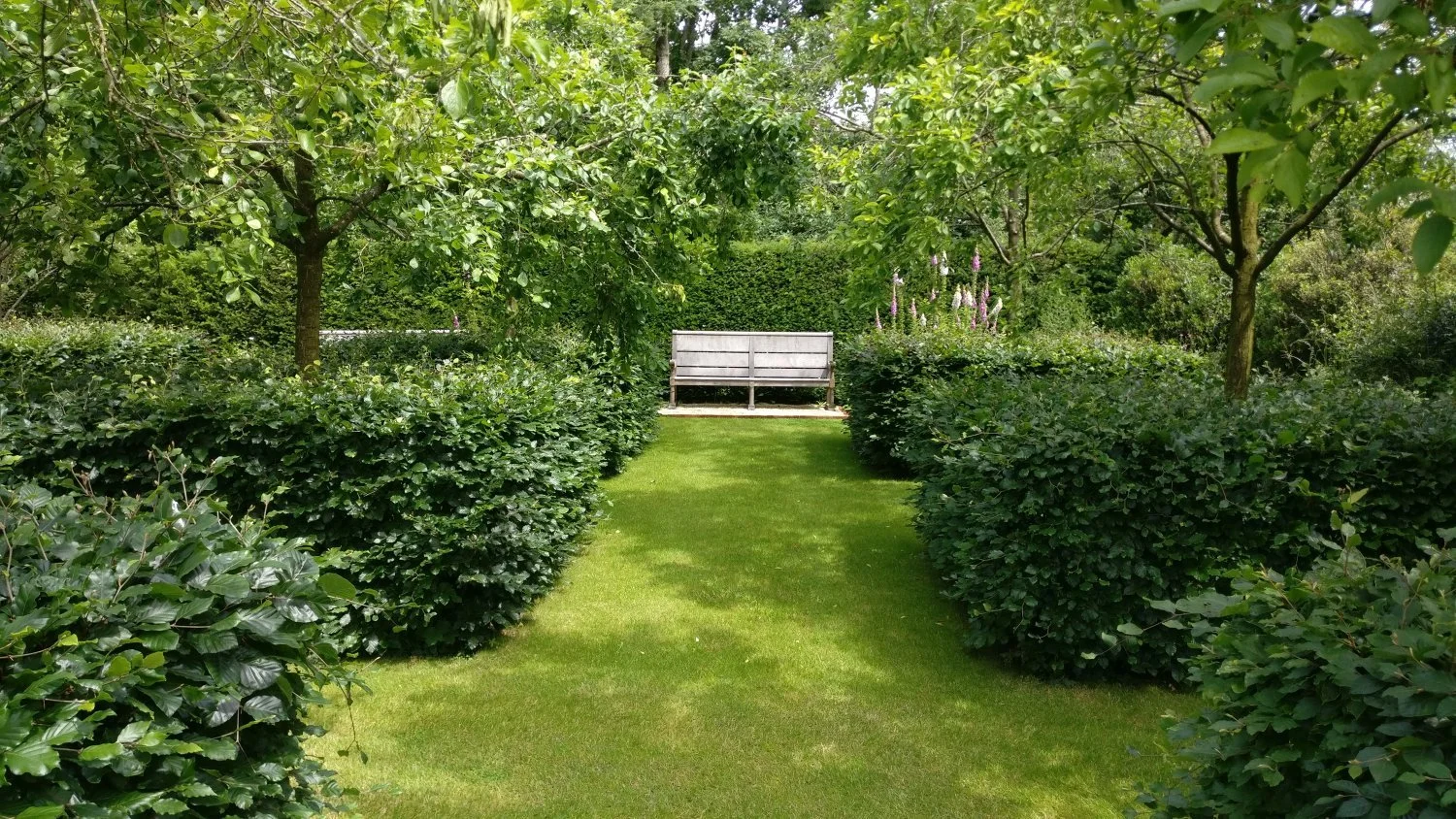
Yew maybe, what with Malus Farm being next to our village church. Beech possibly, because I adore it. Neither look like box (choose a Lonicera or, even better, Ilex crenata, if you just can’t bear to be without it) but if you can’t change something, make a feature of it.
Although it has since succumbed to box caterpillar, I am still obsessed by the shape of Nigel Slater’s kitchen garden edges. So big and square. Until my own hedges reach that size, I will be focusing on two things.
Firstly, a light trim to make sure the growth stays neat and even. If you wait until the box has reached the desired size before you train it, you are likely to do a first trim and find all sorts of bare branches and patches. Little and often in the final desired shape will get you there eventually. Use a sheet or a tarpaulin to catch the bits, box clippings are notorious for evading even the most assiduous sweeping.
Secondly, feeding. Box looks amazing mature, and often a bit disappointing in its adolescence. Patience is required, but you can keep this time to a minimum by diligent feeding in the growing season. Chicken manure pellets are fine. We’re after nitrogen here for green, leafy growth.
If you are letting go of box because where you are has blight and caterpillar, I do rate Lonicera nitida because it is everywhere here and grows like the clappers. Not great for small topiary, but amazing for bigger shapes and hedges. If you are after traditional balls and shapes, I hear great things about Osmanthus x Burkwoodii, although I confess that I haven’t tried it myself.